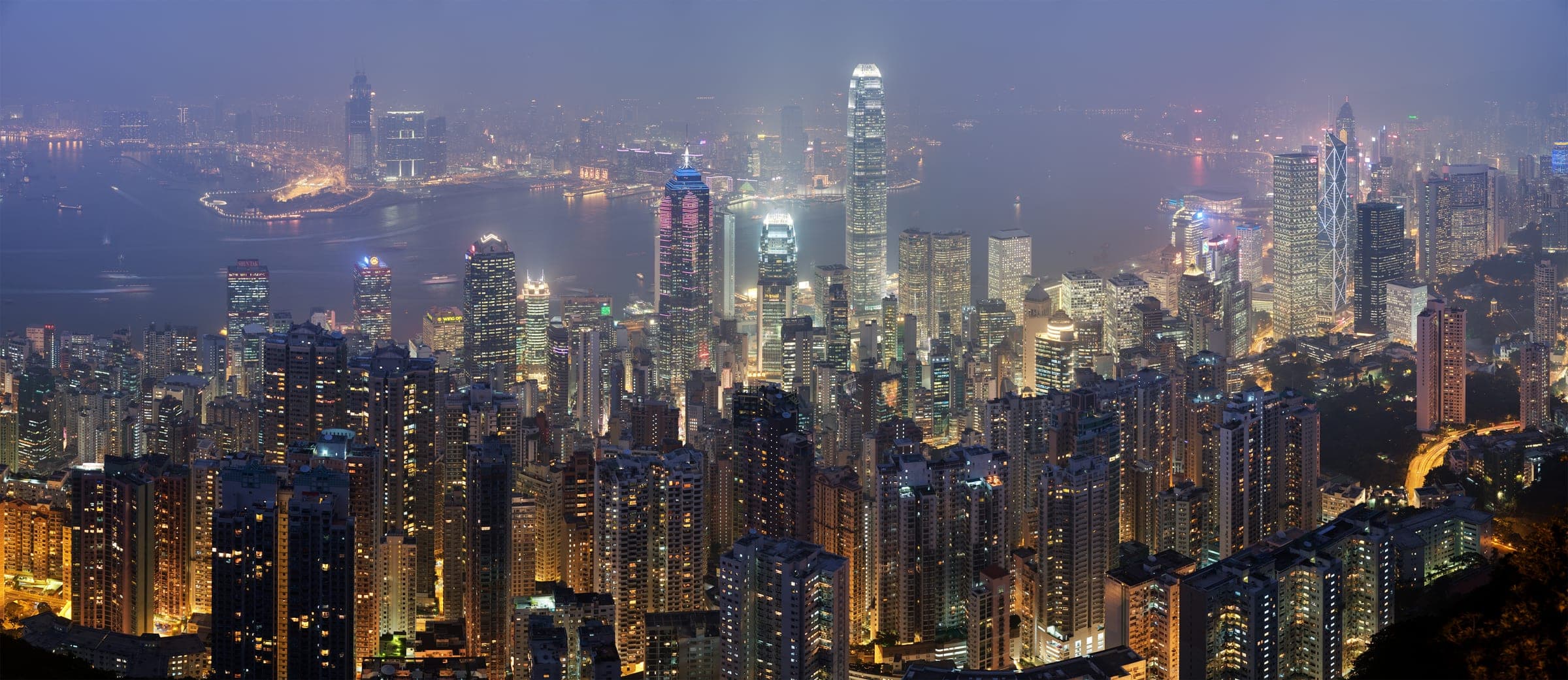
One of the few long-haul stations where a short layover genuinely buys a city, because the Airport Express covers 35.3 km to Hong Kong Station in as little as 24 minutes; the risks are what you are carrying through customs and what the Observatory hoists while you are out.
Updated information on dual Chinese-British nationality, E-cigarettes and illegal drugs including CBD (cannabidiol) (‘Warnings and insurance’, ‘Entry requirements’ and ‘Safety and security’ pages).
Six hours can buy a city here, which is rare on a long-haul network, but only just.
1Twenty-four minutes is the fastest run, not the timetabled every run, so budget about an hour of the six on the two Airport Express legs and expect something over two hours in town once arrival immigration and the return check-in are allowed for.
2Tap in and out with one Octopus or one contactless card. The free same-day return applies only if the same payment method is used for entry and exit.
3Stay on the Hong Kong Island side, around Central and Sheung Wan, or get out at Kowloon. Doing both and crossing the harbour is what eats the margin.
4Check the Observatory before you commit. A No. 8 signal or a black rainstorm warning strands you in town, not at the airport.
Twelve hours is a real evening or a real day, and enough for both sides of the harbour.
1Enough for one district on the Island and one in Kowloon, using the Airport Express plus the free MTR connections included in the fare.
2In-town check-in is free with the Airport Express fare, so bags can go early and you travel back light. Confirm your airline participates before you rely on it.
3Taxis are metered and inexpensive by long-haul standards: HK$29 covers the first 2 km in an urban red taxi, with HK$6 added for each piece of baggage beyond light hand luggage.
A full day, and the only window long enough for the weather to change on you.
1Long enough to sleep, get out twice, and absorb a No. 3 signal or an amber rainstorm without losing the whole layover.
2Do not plan on crossing into the Mainland. Hong Kong's visa-free entry is permission to enter Hong Kong, and the Immigration Department treats the Chinese Mainland as a separate destination.
3The Airport Express free return is same-day only. A trip into town on a second day is a new fare, so a round trip ticket at HK$215 to Hong Kong Station is the comparison to make.
The Skylane’s read, built on the transfer times sourced above.
Airport Express terminus and the free MTR interchange, so it costs the least time of anywhere in the city.
Sheung Wan
One stop west of Central on the Island line and walkable from it, which adds nothing to a tight return time.
Wan Chai
Convention and hotel district on the Island line, a few stops from the Airport Express terminus at Hong Kong Station.
Causeway Bay
Late-opening retail on the Island line, and the furthest Island district that still returns to Hong Kong Station quickly.
Tsim Sha Tsui
Kowloon waterfront, a short hop from Kowloon Airport Express station, with the Star Ferry as an alternative to the cross-harbour tunnel.
Mong Kok
Dense street-market Kowloon, and the longest of these back to either Airport Express station.
What things costPublished rates only
Airport Express, airport to Hong Kong StationHK$120Adult single, paying by Octopus or QR code. A Smart Ticket is HK$130 and a round trip HK$215.MTR · Sep 2026
Airport Express, airport to KowloonHK$105Adult single, Octopus or QR code. Smart Ticket HK$115, round trip HK$195.MTR · Sep 2026
Airport Express, airport to Tsing YiHK$73Adult single, Octopus or QR code. Smart Ticket HK$80, round trip HK$130.MTR · Sep 2026
Urban taxi, first 2 kmHK$29Red urban taxi flagfall, then HK$2.10 per 200 m or minute of waiting up to HK$102.50 and HK$1.40 per increment thereafter.Transport Department · Sep 2026
Taxi baggage surchargeHK$6 per pieceAdded to the meter for each piece other than light personal hand baggage carried in the passenger compartment. Tunnel surcharges of HK$8 to HK$28 are separate, and cross-harbour tunnels are HK$25 plus a HK$25 return toll.Transport Department · Sep 2026
Smoking in a no smoking areaHK$3,000 fixed penaltyApplies on public transport and in the indoor areas of restaurants, bars and workplaces, and in public pleasure grounds, bathing beaches, public swimming pools and stadiums.Tobacco and Alcohol Control Office · Sep 2026
Possessing a vape in a public placeHK$3,000 fixed penaltyIn force since 30 April 2026 within the specified limits of five capsules or 5 mL, 100 heat sticks or 100 herbal cigarettes; above them, up to HK$50,000 and six months.HKSAR Government · Sep 2026
Only rates the operator or the authority publishes. Anything not listed is not published, so treat a figure from anywhere else as somebody’s estimate.
CBD is a dangerous drug here, vapes are contraband, and you must be able to produce your passport on demand.
01
Cannabidiol has been listed as a dangerous drug under the Dangerous Drugs Ordinance since 1 February 2023. Possession or consumption carries a maximum of seven years and a HK$1 million fine. Trafficking, which the Narcotics Division states expressly includes importing and exporting, carries a maximum of life imprisonment and a HK$5 million fine.
02
Vapes and heated tobacco are contraband. No person may import an alternative smoking product, including by bringing one in as an incoming traveller: the penalty is up to HK$500,000 and two years on summary conviction, or HK$2 million and seven years on indictment. Since 30 April 2026 possessing e-cigarette capsules, liquids, heat sticks or herbal cigarettes in a public place has been an offence, with a HK$3,000 fixed penalty within the specified limits of five capsules or 5 mL of substance, 100 heat sticks or 100 herbal cigarettes, and a maximum HK$50,000 fine and six months above them.
03
Smoking in a statutory no smoking area is a HK$3,000 fixed penalty. The designated areas include any public bus, public light bus, taxi, MTR train, light rail vehicle, tramway car, peak tram car or ferry vessel, plus indoor areas of all restaurants, bars and workplaces, public pleasure grounds, bathing beaches, public swimming pools and stadiums. From 1 January 2026 the ban extends to within three metres outside the entrances and exits of schools, hospitals, childcare centres, residential care homes and specified clinics and health centres.
04
Carry your passport. Section 17C of the Immigration Ordinance empowers immigration and police officers to require a person to produce proof of identity for inspection, which for a visitor means a valid travel document. Failing to do so is an offence carrying a fine at level 2, and the police note that an officer may bring the person to a police station for further enquiry.
05
Visa-free entry to Hong Kong runs from 7 days to 180 days depending on nationality, and it is permission to enter Hong Kong. The Immigration Department's own rules treat the Chinese Mainland and Macao as separate destinations, exempting from the onward-ticket requirement only those in transit to them, and it advises checking individual cases with a Chinese diplomatic or consular mission. Do not treat a day trip to Shenzhen as a domestic hop.
The Airport Express runs the 35.3 km between the airport and the city in as little as 24 minutes. AsiaWorld-Expo is about 28 minutes from the city centre.
The Road Traffic (Amendment) (Ride-Hailing Service) Ordinance 2025 requires platforms, vehicles and drivers providing ride-hailing services to obtain licences or permits. When it passed, the government said it expected licensed platforms may start operating in the fourth quarter of 2026.
A local SIM must be registered to your passport before it will activate.
Prepaid SIM cards and SIM service plans issued in Hong Kong must complete real-name registration before activation. The Telecommunications (Registration of SIM Cards) Regulation came into operation on 1 September 2021, with registration required from 1 March 2022, and the programme is now fully implemented.
Two separate warning systems, one for wind and one for rain, and the No. 8 signal is the one that ends your day out.
Tropical cyclone signals run 1, 3, 8, 9 and 10. No. 1 means a cyclone is centred within about 800 km of Hong Kong and may affect the territory. No. 3 means strong wind near sea level, sustained 41 to 62 km/h with gusts that may exceed 110 km/h. No. 8, issued in four directional variants, means gale or storm force wind, sustained 63 to 117 km/h from the quarter indicated with gusts that may exceed 180 km/h. No. 9 means that gale or storm force wind is increasing or expected to increase significantly. No. 10 means hurricane force, sustained 118 km/h or above with gusts that may exceed 220 km/h.
A 10 per cent service charge is normal and should be displayed; the disputes are over what else gets added.
The 10 per cent service charge is standard, and the Consumer Council's advice to restaurants is to display it clearly on menus, at entrances and exits and other prominent locations, or to have staff explain it when customers arrive or order.
A free port that charges no tariff either way, but a tight allowance on what you carry in.
Hong Kong is a free port with a free trade policy and no barriers on trade. No tariff is charged on the import or export of goods, although some goods need a licence to meet international obligations or public health and safety needs.
Consumer CouncilPromotional offers, service charges and rounding offChecked Sep 2026
Consumer CouncilMisunderstandings could arise easily from wordings on menuChecked Sep 2026
HKSAR GovernmentSubsidiary legislations relating to regulation of ride-hailing services gazettedChecked Sep 2026
HKSAR GovernmentProhibition on possession of specified alternative smoking products in public places · Possessing a vape in a public placeChecked Sep 2026
MTRAirport Express tickets and fares · Airport Express, airport to Hong Kong Station · Airport Express, airport to Kowloon · Airport Express, airport to Tsing YiChecked Sep 2026