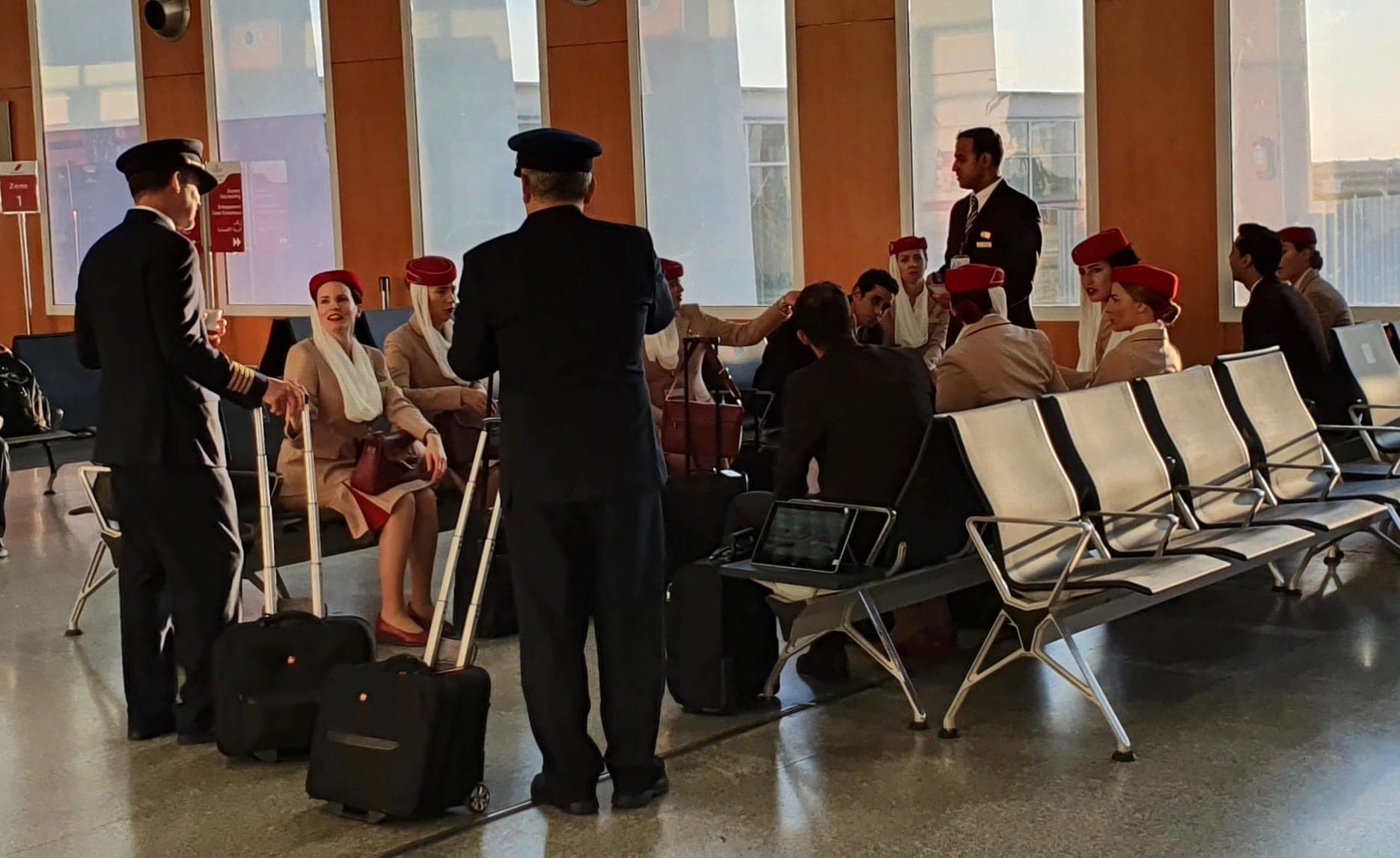
A widebody cabin is a hierarchy, and the person running it started where every new joiner starts: in the economy galley, on probation, being watched. The path from there to inflight manager is well defined at the big Gulf carriers, but it is slower and more performance-gated than most new joiners expect. Understanding the grades, the timelines and the money at each step is the difference between managing a career and drifting through one.
This is how cabin crew progression actually works at a Gulf widebody operator, using Emirates as the reference model because its grade structure is the most documented. Etihad and Qatar differ in the details, but the shape is the same.
The grades, and the money at each one
Progression runs through a defined ladder, and each rung carries both more responsibility and more pay.
Grade 2, entry level, zero to twelve months. This is where everyone begins, working the economy cabin, with the first six months a formal probation. Base pay sits around AED 9,500 a month before flying pay and allowances.
Grade 1, roughly one to two and a half years. You move across economy and business cabins, taking more responsibility. Pay rises to around AED 11,000 to 12,500.
Senior crew member, roughly two and a half to five years. You work the premium cabins, including first class, and you begin leading junior crew rather than just being led. Pay steps up to around AED 14,000 to 17,000.
Purser, from around five years. This is the first true management rung in the air. The purser is the shift lead for the cabin, accountable for the whole crew complement on the flight. Pay reaches around AED 18,000 to 22,000.
Cabin supervisor and inflight management, from roughly seven to ten years and beyond. The senior widebody role, running a full crew serving 400-plus passengers, and the gateway to ground-based inflight management, training and recruitment roles.
Those figures are base pay. Total earnings include flying pay, layover per-diems and accommodation, which lift take-home meaningfully above the base, particularly for crew who fly heavy long-haul rosters.
The timeline is a floor, not a schedule
The single most useful thing to understand about this ladder is that the years attached to each grade are minimums, not entitlements. Promotion is assessed, not automatic.
At Emirates, crew are assessed roughly every twelve to eighteen months, and each assessment either moves you up or holds you where you are. Most crew reach senior crew member in three to four years, and progress roughly every two to four years after that, but those are the outcomes for people who perform. Consistent service standards, safety record, flight reports and, at the senior end, demonstrated leadership all feed the decision. A poor stretch does not just fail to promote you, it resets the clock.
The practical consequence is that two people who join on the same day can be a full grade apart within five years. The ladder is standardised; the speed of climbing it is not.
What actually drives promotion
Beyond simply logging time, the things that move crew up are consistent across the Gulf carriers.
- Service standards that hold up under assessment, not just on a good day
- A clean safety and compliance record, which the senior grades weight heavily
- Language skills, which matter more as you move toward premium cabins and international rosters
- Demonstrated leadership before you are promoted into a leadership grade, because the assessment is looking for someone already doing the job, not someone who might grow into it
- Willingness to take the long-haul widebody rosters where the senior roles and the visibility are
Moving between carriers
Cross-airline moves are common in the Gulf, and they cut both ways. Experience at one major carrier transfers well to another, and crew do move between Emirates, Etihad, Qatar and the low-cost operators for faster progression, a preferred base or a better roster. But seniority does not always travel intact. A senior crew member at one airline may not step straight into the equivalent grade at another, because internal time and internal assessments often reset on joining. Weigh a move that promises a better cabin or base against the possibility of restarting part of the seniority climb.
The low-cost comparison
The widebody full-service path is not the only one. Low-cost Gulf carriers such as flydubai and Air Arabia pay lower base rates at the junior grades but can offer faster upgrades and stronger overtime, because their crews fly more sectors. For someone optimising for early responsibility and total hours rather than premium-cabin prestige, the low-cost route can reach a leadership grade sooner, even if the headline package at the top is smaller.
How to manage the climb
Treat every assessment cycle as the promotion decision it is, rather than a formality. Build the leadership evidence before you are eligible for the grade, not after. Protect the safety and compliance record, because it is the one thing that can undo years of good service in a single lapse. And be deliberate about carrier moves, taking them for a concrete gain in base, roster or progression rather than a lateral change that quietly costs you seniority.
The ceiling in this career is genuinely high, inflight management, training, recruitment, and the ground roles that outlast a flying career. But the ladder rewards consistency over time far more than it rewards a strong start, and the people who reach the top are usually the ones who understood the assessment cycle early and worked it deliberately.
A note on sourcing
Grades, timelines and pay figures here reflect the Emirates cabin crew structure as reported in 2024 to 2026 crew and salary sources, used as the reference model for Gulf widebody carriers. Etihad and Qatar use comparable structures with different grade names and figures. Airlines revise pay and progression periodically, so confirm current bands and criteria against each carrier's own crew material before relying on specific numbers.